The Most Overlooked Asset on Your Balance Sheet
The most overlooked driver of property value isn't the building — it's how thoughtfully you design the land around it, since environments that work with nature instead of against it retain tenants and multiply asset value.
Most businesses that own or develop physical property spend enormous energy optimizing the structure itself: the layout, the finishes, the systems inside the walls. The land around it gets whatever budget is left over, if any. That imbalance is quietly expensive. Land and physical environment aren't decoration — they are financial infrastructure, and businesses that treat them as an afterthought are leaving measurable revenue unclaimed.
The Problem: Land as Leftover Space
Standard development practice treats a site plan like a template. A floor plan gets drawn with straight lines and dropped onto a piece of land, regardless of that land's actual shape, slope, or drainage pattern. It looks efficient on paper. In construction, it rarely is. Ignoring a site's natural topography forces expensive retention walls, additional drainage infrastructure, and heavy earthworks — costs that show up before a single unit is built, often running into hundreds of thousands of dollars that a design working with the land's existing contours would have avoided.
The same blind spot shows up at the operating level. Once a property is built, its physical environment keeps doing quiet work every day — either reinforcing why someone should stay, or giving them a reason to leave. A property with declining curb appeal doesn't just look worse; it erodes the goodwill that keeps customers and tenants renewing.
Why It Matters
Every business with a physical location or product experience — not just real estate — has some version of this leak. A retail storefront, a clinic waiting room, a rental property, a restaurant patio: all of them either compound trust over time or slowly bleed it. The businesses that treat the environment as strategic infrastructure protect and grow revenue that businesses treating it as a discretionary expense are quietly losing.
This matters most acutely for two groups: capital-intensive businesses (like real estate development) where site-design decisions are made once and locked in for decades, and any customer-facing business where retention depends partly on physical or experiential environment, not just price or product. In both cases, the cost of neglect rarely shows up as a single line item — it shows up diffusely, as higher build costs spread across a project, or as a slow drip of non-renewals that never gets traced back to its actual cause. That's precisely why it survives as a blind spot: nothing about it demands attention until the value it was quietly destroying is already gone.
Key Lessons
Sustainability sets the bar too low. The word "sustainable" literally means to keep something as it is — at best, doing a little less harm than before. But nothing in nature holds steady; every living system is either growing or decaying. The businesses that get real financial upside from their physical environment aren't the ones minimizing damage — they're the ones actively designing for growth, restoration, and increased value. That's the difference between sustainability and regeneration, and it's a financial distinction, not just a philosophical one.
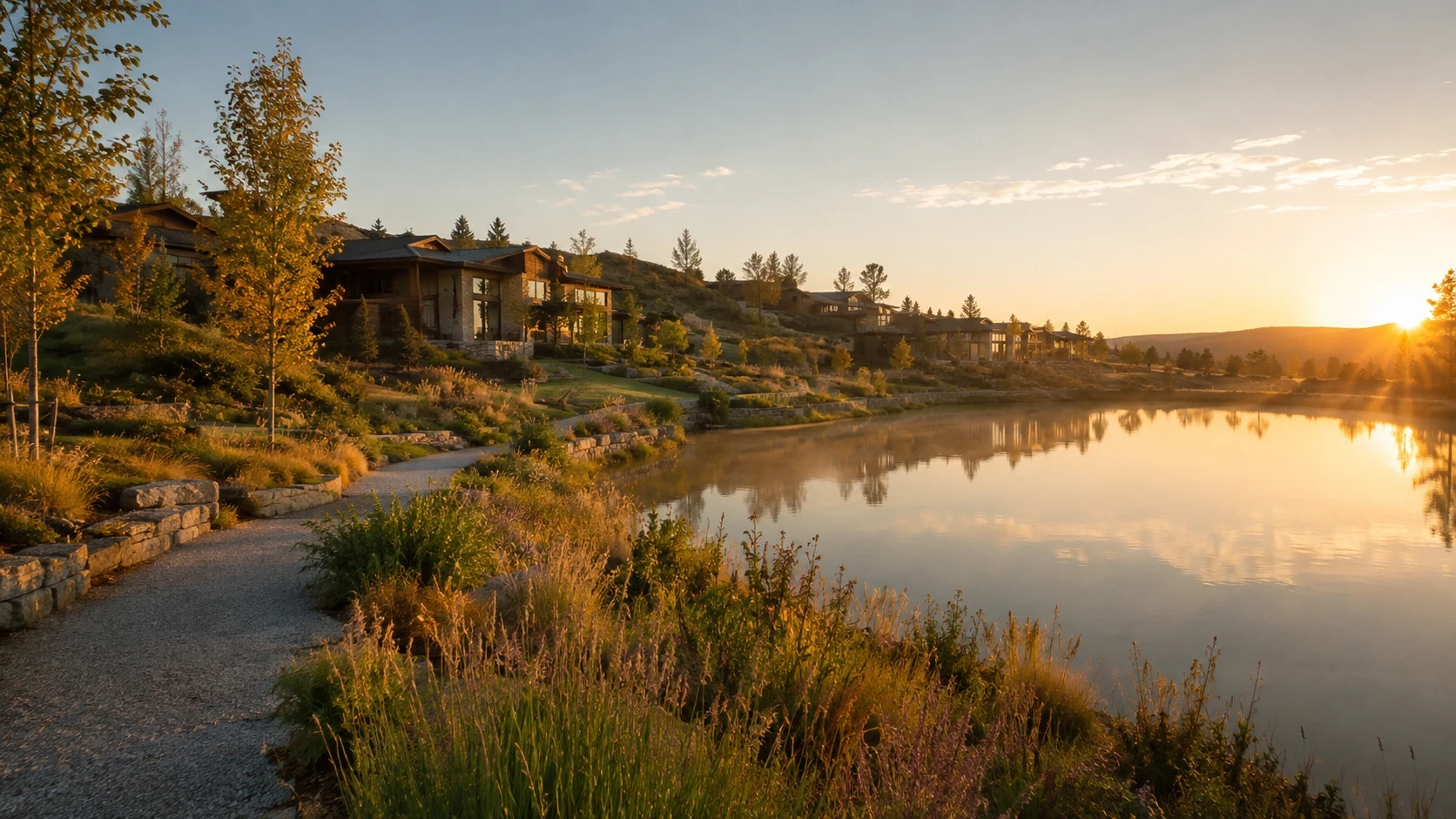
"Unusable" space is often undervalued space, not worthless space. A slope too steep to build on, an easement too wet to develop, a corner too awkward to landscape conventionally — these get written off by default rather than evaluated. In one real-world case, a swampy easement a developer planned to fence off and ignore was reshaped into a lake feature that became the centerpiece of an entire 140-unit development, allowing the builder to market lakefront homes instead of dead space. The land hadn't changed. The evaluation had.
Curb appeal is a retention metric, not a vanity metric. A property's physical environment is part of the customer experience, whether or not a business thinks of it that way. A neglected, uninviting environment quietly erodes the reasons a tenant or customer has to stay; a well-designed one reinforces them. This is measurable, not just aesthetic — retention and renewal rates respond to it directly.
Selling high-investment work requires educating before pitching. When the value of an investment isn't immediately obvious, showing a prospect the cost of their current path is more persuasive than describing an alternative. Surfacing a hidden cost or missed opportunity the prospect didn't know they had makes the case for the work before any pitch begins.
Proximity and proactive outreach create opportunities that inbound leads never will. The highest-value client relationships rarely arrive through a website form. One landscape architect's largest project to date — a 150-hectare regenerative development — began because he chose to arrive at a conference destination several days early, worked through his personal network to arrange meetings with local contacts, and stayed open to an unplanned introduction. The lesson isn't "networking is good," which everyone already knows. It's that most founders treat relationship-building as something that happens around the work trip, when it should be treated as part of the trip's actual return on investment — planned with the same intention as the conference agenda itself.
Practical Framework
For any business evaluating a physical or environmental investment, four questions cut through the noise:
What is the land, space, or environment already doing? Where does water naturally flow, where does traffic naturally move, what's already working — and where is the current design fighting against those forces rather than using them?
What are we writing off as unusable that we haven't actually evaluated? Odd corners, slopes, easements, or underused areas are often assumed to be dead weight rather than assessed for potential.
What is the environment costing us in retention, not just in build cost? Turnover, non-renewals, and declining satisfaction often trace back to physical or experiential neglect that never shows up as a line item until it's already lost revenue.
Are we creating the conditions for a high-value introduction, or just waiting for one? The businesses that consistently land their best clients tend to have engineered the opportunity for a warm introduction — extra time on a trip, a call to a dormant contact — rather than hoping one arrives.
Implementation
Start with an audit, not a redesign. Walk the property or review the site plan and identify: (1) any area currently generating extra engineering or maintenance cost because the design fights the natural terrain, and (2) any area currently excluded from value creation because it was assumed to be unusable. Both are candidates for a low-cost redesign pass before committing to a full renovation or new-build plan.
For customer-facing businesses without large physical footprints, the same audit applies to whatever "environment" your customer experiences — a waiting room, a storefront, a product's onboarding experience. Ask where that environment is quietly working against retention, and treat fixing it as an investment with a measurable return, not a discretionary expense.
The same discipline applies to business development. Before the next industry event, conference, or trip that puts you near a cluster of potential clients or partners, build in extra time deliberately, and work your existing network ahead of arrival rather than after. Treat that time as part of the trip's budget and expected return, not as an optional add-on.
Common Mistakes
The most common mistake is budgeting for environment last, after the "real" work is done — which guarantees it gets under-resourced regardless of its actual return. A close second is treating unconventional land features as liabilities by default rather than running the numbers on their potential use. A third is relying on inbound interest or organic referrals to produce high-value relationships, rather than proactively creating the conditions for an introduction to happen. And a subtler mistake is assuming that once a physical environment is retention-neutral, it's fine — when in reality it's rarely neutral; it's either actively helping or actively hurting.
Action Steps
Identify one feature of your property, site plan, or customer environment currently treated as a liability, and evaluate what it could become instead of what it costs to remove.
Audit whether your current design works with or against the natural terrain, traffic pattern, or flow of the space — and quantify what fighting it is costing you.
If retention has been slipping, check the physical or experiential environment before assuming the cause is pricing or marketing.
Before pitching a high-investment offer, identify the hidden cost your prospect is already paying, and lead with that instead of your service description.
Before your next trip near a cluster of potential clients or partners, build in extra time and proactively work your network ahead of arrival rather than leaving relationship-building to chance.
Conclusion
The land, space, or environment surrounding your business isn't neutral — it's either compounding value or quietly losing it. Businesses that treat their environment as designed infrastructure, evaluated with the same rigor as any other asset, consistently find revenue that businesses treating it as leftover space never do. The work isn't glamorous. It's an audit, a reframe, and a willingness to ask what an "unusable" space could become. But it's some of the highest-return work available to any business with a physical footprint.