BUSINESS SUPERFANS® ADVANTAGE • EPISODE 220
Sales
Revenue Reactor Discipline
Sales
Blocked Growth Addressed
The primary growth blocker is a listening failure that surfaces after a lead is already generated — pitching before diagnosing costs the deal and the relationship's future referral and partnership value.
Primary Stakeholder
Customers
Additional Stakeholders
Leadership Team
Primary Topic
Sales Conversations & Listening
DIRECT ANSWER
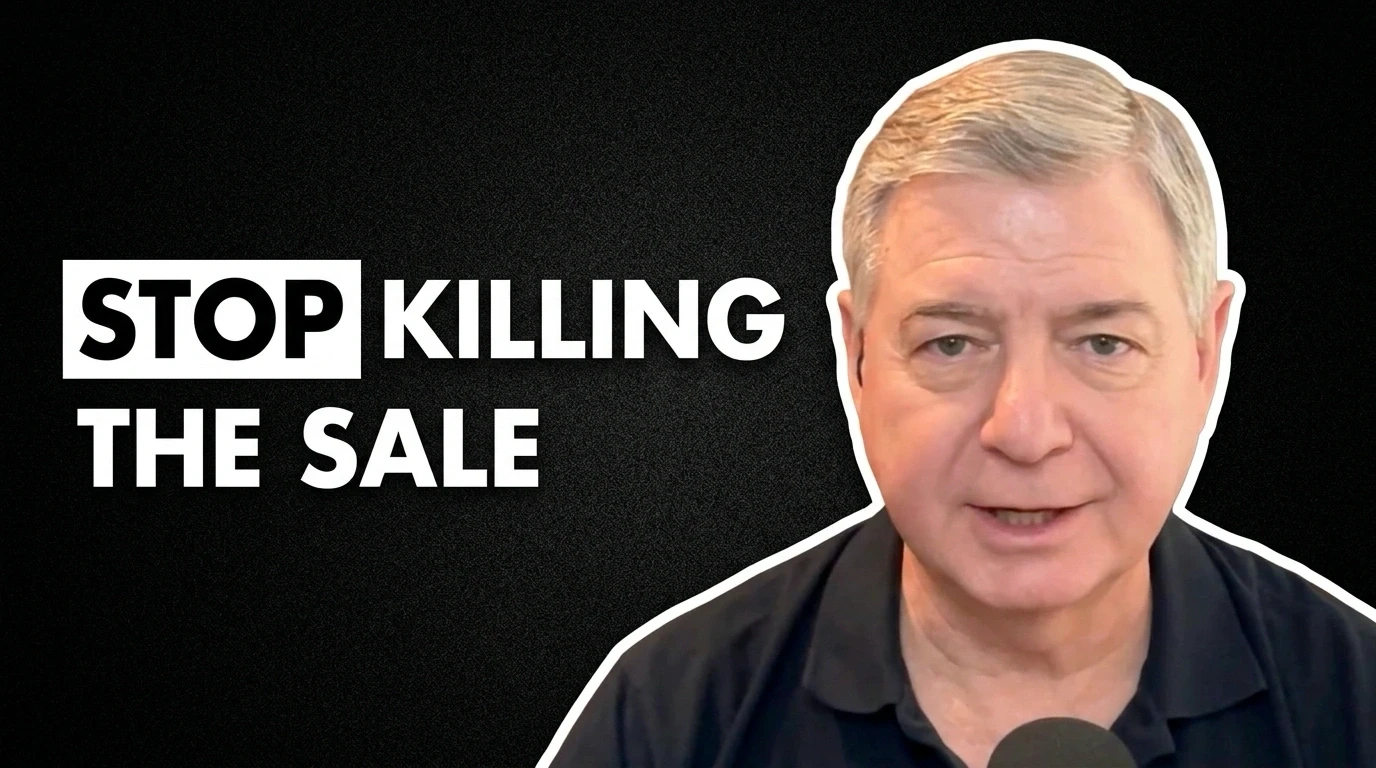
You can kill a sale, or a valuable partnership, without being rude, without a weak product, and without being bad at sales. It happens when you listen for an opening to pitch instead of listening to understand the other person's business, priorities, and what they are deliberately not trying to build right now.
Why This Guest’s Perspective Matters
Frederick Dudek has spent 40+ years advising service businesses and has personally conducted hundreds of discovery and partnership conversations — including this one — making him well positioned to name the exact moment a promising conversation turns into a missed opportunity, and why it usually isn't about the pitch itself.
Key Discoveries From This Conversation
Root cause: Deals aren't lost primarily at the top of the funnel; they're lost in how well a conversation actually listens.
Misconception: A successful lead-generation outreach (the call happened, the time was given) can mask a completely broken relationship process downstream.
Strategic shift: Flip the audition — invite the other party to experience your product or process themselves before you evaluate whether their approach fits yours.
Practical method: Ask "how do I make this relationship stronger when we finish this conversation?" instead of "how do I close this person?"
Business consequence: When a prospect feels like a target instead of a partner, the compounding future value of that relationship — referrals, introductions, better future timing — disappears.
Outcome: A more durable pipeline of referral and partnership relationships, versus more prospects "leaking" out of an already-full funnel.
Listen for understanding, not an opening. Waiting for permission to pitch is a different activity than actually diagnosing what the other business needs — and prospects can tell the difference.
Context outranks the literal word. A "someday" mention isn't a present-tense decision; repackaging it as one manufactures a choice nobody asked to make.
Fit runs in both directions. Your sales process should determine whether you can create value for the customer's business — not bend their business around what you sell.
Outcome and method aren't the same thing. "I want more revenue" doesn't always translate to "I need more leads" — check follow-up, retention, referrals, and reputation first.
A generated lead isn't proof of a healthy process. The revenue leak can happen entirely after the lead already arrived.
Every relationship carries value beyond today's transaction. Protect it even when the immediate deal doesn't close — the next introduction or referral may come from it anyway.
0:00 — Cold open and show introduction — Previews the core lesson before the story that inspired it.1:59 — Welcome to Episode 220: how to kill a sale without trying — Frames why listening, not rudeness or product quality, decides whether a deal survives.4:20 — Lesson 1: Don't listen for an opening, listen for understanding — The difference between waiting to pitch and actually diagnosing a prospect's business.6:37 — Lessons 2 and 3: context over words, and fit runs both ways — Why a "someday" comment isn't a decision, and why a sales process shouldn't reshape the customer's business.8:58 — Lesson 4: don't confuse the outcome you want with your default method — Why "more leads" isn't always the fix, using the doctor-and-sore-elbow analogy.11:20 — The Business Superfan question to ask before every sales call — Replacing "how do I close this person?" with "how do I strengthen this relationship?"13:40 — Episode close and free Revenue Leak Score CTA — Where to check your own business for the leaks this episode describes.
PUT THIS INTO PRACTICE
Before your next sales call, networking conversation, or partnership discussion, write down one question you will ask purely to understand the other person's business, not to find your opening. Ask it early, actually listen to the answer, and only then decide honestly whether what you offer fits what they need. If you want to see where these same conversations may be quietly costing your own business revenue, take the free Revenue Leak Score at RevenueReactor.AI — it takes about 10 minutes.
his episode is Freddy D's Playbook at its most practical — a single hour-long conversation, dissected in real time, that shows exactly where good deals quietly die. What makes it useful is not the story itself; it is the discipline underneath it. Frederick did not walk away because the other person's system was bad — by his own account, it may be excellent. He walked away because the conversation never adjusted once the fit was not there, and because a future possibility got repackaged as a present-tense decision in the follow-up. For service entrepreneurs and SMBs, the lesson compounds well beyond this one call: every prospect, referral partner, or networking contact who feels unheard is a door quietly closing on future recognition, retention, and referrals — the very things predictable revenue is built on. The fix is not a better pitch. It is a better question, asked earlier, and actually listened to.
Revenue Reactor (RevenueReactor.AI) — Frederick's self-sufficient revenue-leak assessment platform, referenced throughout as the model he's protecting from being forced into a "book more Zoom calls" sales process.
Go High Level — the CRM/automation platform Frederick uses to route and personally follow up with Revenue Reactor leads when it makes sense.

Prosperous Ventures, LLC
Guest Offer
Get Your FREE Business Growth Assessment at: https://RevenueReactor.ai

The time-tested playbook that converts your customers, employees, and business partners into Superfans for bigger sales, broad awareness and long term success.
By Frederick Dudek
Creating Business Superfans® by L. Frederick Dudek is a practical, relationship-centered playbook for turning everyday interactions into lasting loyalty, advocacy, and business growth. Through consistent follow-up, genuine appreciation, meaningful recognition, and memorable experiences, it shows how to transform customers into repeat buyers and referral sources, employees into committed contributors and enthusiastic ambassadors, and business alliance partners into trusted collaborators. Its central message: when people feel valued, they are more likely to stay, recommend your business, and actively contribute to its success.
Key Lessons
Build relationships beyond the sale. Consistent, valuable follow-up strengthens trust and creates future opportunities.
Make people feel valued. Personalized appreciation and specific recognition inspire loyalty and advocacy.
Retain the people who drive your success. Nurture customers, employees, and partners with the same commitment used to attract them.
Create experiences worth sharing. Thoughtful extras and excellent service recovery give people reasons to recommend you.
Make referrals easy. Earn recommendations, ask specifically, and thank those who introduce you.
Turn good intentions into habits. Use the book’s scorecard to identify gaps and establish consistent improvement routines.
Who Should Read This
Solopreneurs and new entrepreneurs building their customer base.
Small and mid-sized business owners seeking sustainable growth.
Service professionals, consultants, agencies, and trade business owners.
Sales professionals and managers seeking stronger relationships and more referrals.
Customer service and customer success teams focused on retention.
Team leaders looking to improve employee engagement and loyalty.
Business owners who rely on contractors, resellers, or strategic partners.
Topic Tags
Sales Process, Active Listening, Referral Partnerships, Business Development, Customer Experience