BUSINESS SUPERFANS® ADVANTAGE • EPISODE 227
FEATURED
Marketing

Revenue Reactor Discipline
Marketing
Blocked Growth Addressed
The primary growth blocker is marketing that runs unchecked and out of sight, from ads burning budget on bot traffic to AI-made content no one reviews, while search has shifted to reward specific, recently validated businesses.
Primary Stakeholder
Strategic Partners
Additional Stakeholders
Customers, Referral Partners, Suppliers (promotional products), Complementary Businesses (other agencies)
Primary Topic
Getting Found in AI Search and Accountable Digital Marketing
DIRECT ANSWER
You get found in AI search by building on solid SEO, matching the specific questions customers now ask, and earning fresh signals of trust such as recent reviews and links from people who vouch for you. Lauren Schafer adds that every channel, including paid ads, needs a human checking the numbers.
Why This Guest’s Perspective Matters
Lauren Schafer pairs a traditional marketing foundation from NC State with self-taught SEO and social media and a Northwestern digital marketing program. She founded Lake House Digital during the pandemic, went all in on it in 2023, and now leads a team whose account managers carry about five or six clients each, a fraction of a typical agency load.
Key Discoveries From This Conversation
Root cause: unchecked ads burn budget on bots. A life science manufacturer came to Lauren spending about $20,000 a month on Google Ads with no geographic or industry limits. She estimates $16,000 to $18,000 of it was bot traffic, because a junior person had set it up and “they just kind of let it go.”
Misconception: AI made SEO obsolete. Lauren says the opposite: owners with solid SEO have a better foundation for adding AI elements, and “SEO as a foundation is still more important than ever.”
Strategic shift: searchers now ask for exactly what they want. Two years ago people typed “pizza near me.” Now, Lauren says, they ask for the best thin crust sausage pizza near them, and AI tools look for the business whose own site matches that request.
Practical method: write access into the contract. Lake House requires regular conversations with every client, at least every other week, and gives each one a live dashboard that pulls in every channel, even if the agency only runs their social media.
Business consequence: freshness outranks volume. In Lauren’s example, a new pizza place with a handful of reviews from the last six months can be favored over one with 500 reviews that haven’t been added to in years, because AI looks for the most recent validation.
Measurable outcome: a quarter of the spend, real leads. After tightening targeting to roughly 15 to 18 strong life science regions, the same client now spends about $5,000 a month and gets actual leads. Lauren says the client has since become a referral partner.
Audit your ad targeting before raising your budget. Broad settings with no geographic or industry limits can send most of your spend to traffic that will never buy.
Write pages for the full question, not the keyword. Landing pages, titles, and FAQs that mirror how people actually phrase a request are what AI search can match.
Keep reviews coming in. A steady flow of recent reviews tells search tools you are still trusted today.
Earn links from people who vouch for you. A chamber of commerce listing, a partner’s site, or a podcast appearance all count as third-party credibility.
Don’t ignore the smaller platforms. Bing is the default on many work computers, and Yelp reviews still surface in search results.
Put a human at both ends of AI work. Start with a clear concept, let the tool speed up the middle, then check the brand, the text, and the hands before anything goes live.
Expect an agency to share the dips, not just the wins. A partner who explains a slow July is more useful than one who only reports growth.
1:07 — From pandemic pivot to Lake House Digital — Why Lauren built an agency around analytics and transparency.4:45 — High-touch by design — Five or six accounts per manager and a live dashboard for every channel.8:56 — Access written into the contract — Why regular conversations keep marketing from becoming siloed.14:58 — Referrals over search — Why about 90% of Lake House’s business comes through introductions.19:17 — A $20,000-a-month Google Ads mess — How tighter targeting cut spend to about $5,000 and brought real leads.23:23 — How AI is changing search — Why SEO is still the foundation and searches keep getting more specific.27:36 — Recent reviews beat old ones — What AI looks for before it recommends a business.30:34 — Don’t count out Bing and Yelp — Plus why one business built 450 local landing pages.33:43 — AI graphics need a human touch — Cut-off text, seven-fingered hands, and AI-content labels.39:35 — LinkedIn’s quiet AI filter — How a few “AI slop” reports can pull a post from feeds.
PUT THIS INTO PRACTICE
Ask one hard question about your ad account this week. Open your Google Ads account, or ask whoever runs it, and check three settings: which locations your ads show in, which audiences they target, and how many of last month’s clicks turned into a call, form, or sale. If the answer to the last one is “I don’t know,” pause the broadest campaign until someone can show you the numbers.
Years ago I hired a marketing agency to rebuild a company’s website, and the work was good. What wasn’t good was the silence afterward. We rarely sat down to talk about the analytics, and no one came to me with a strategy. I ended up setting up call tracking myself just to see which calls came from paid search and which came from Facebook.
That’s why Lauren Schafer’s approach stood out to me. She writes access into her contracts. If she’s going to speak for a client, she needs to know how sales are going. That’s not a vendor. That’s a partner, and partners belong on the team.
Her search advice comes down to a line I use often: to be terrific, you need to be specific. People talk to their phones now, in full sentences, and they want exactly what they asked for. The businesses that answer that precisely, and keep earning fresh proof that people trust them, are the ones that get found. And the customers you already have, the ones who introduce you by name, are still the fastest route to the next sale.
How does Lake House Digital keep clients informed about their marketing results?
Lauren Schafer says Lake House Digital gives every client a live dashboard that pulls in all of their marketing channels, even when the agency only runs one, so they can compare social, search, website, email, and paid ads at any time. The agency also writes access into its contracts and talks with clients at least every other week.
How did Lauren Schafer fix a client’s $20,000-a-month Google Ads problem?
Lauren Schafer found a life science manufacturer’s Google Ads set up with no geographic or industry limits, and estimated that $16,000 to $18,000 of about $20,000 a month went to bot traffic. Her team narrowed targeting to roughly 15 to 18 strong life science regions and added audience layers. The client now spends about $5,000 a month and gets real leads.
What does Lauren Schafer say AI search tools look for?
Lauren Schafer says AI search looks for exact matches, credibility, and recency. Searchers now ask detailed questions, so a page that matches the request precisely wins. Tools also look for others vouching for a business through reviews, links, and mentions, and they favor recent validation, so a handful of new reviews can outweigh hundreds of old ones.
Why does Lauren Schafer say AI-made graphics need a human check?
Lauren Schafer has seen clients resize ads with AI and send them out with half the text cut off, and AI images with seven-fingered hands. She also notes that social platforms may label untouched AI images, which can make some audiences question a high-touch brand. Her rule: start with a human concept and finish with a human review.
Lake House Digital — Lauren Schafer’s digital marketing agency for search, social media, email, paid ads, geofencing, and promotional products. thelakehousedigital.com.
Google Ads — the platform where Lauren found a client’s budget going largely to bot traffic.
Bing — Microsoft’s search engine, the default on many work computers running Microsoft Edge.
Yelp — a review site Lauren says is still read regularly and often appears near the top of search results.
ChatGPT and Perplexity — AI search tools Lauren says are gaining ground on Google; ChatGPT now offers ads.
LinkedIn — the platform Lauren leans into most for clients, which now lets members report posts as AI slop.
No sponsor or approved-partner tools were discussed. The guest’s own resource is Lake House Digital (thelakehousedigital.com). Revenue Reactor™ appears only as the closing call to action.
Keep Exploring
EPISODE 210
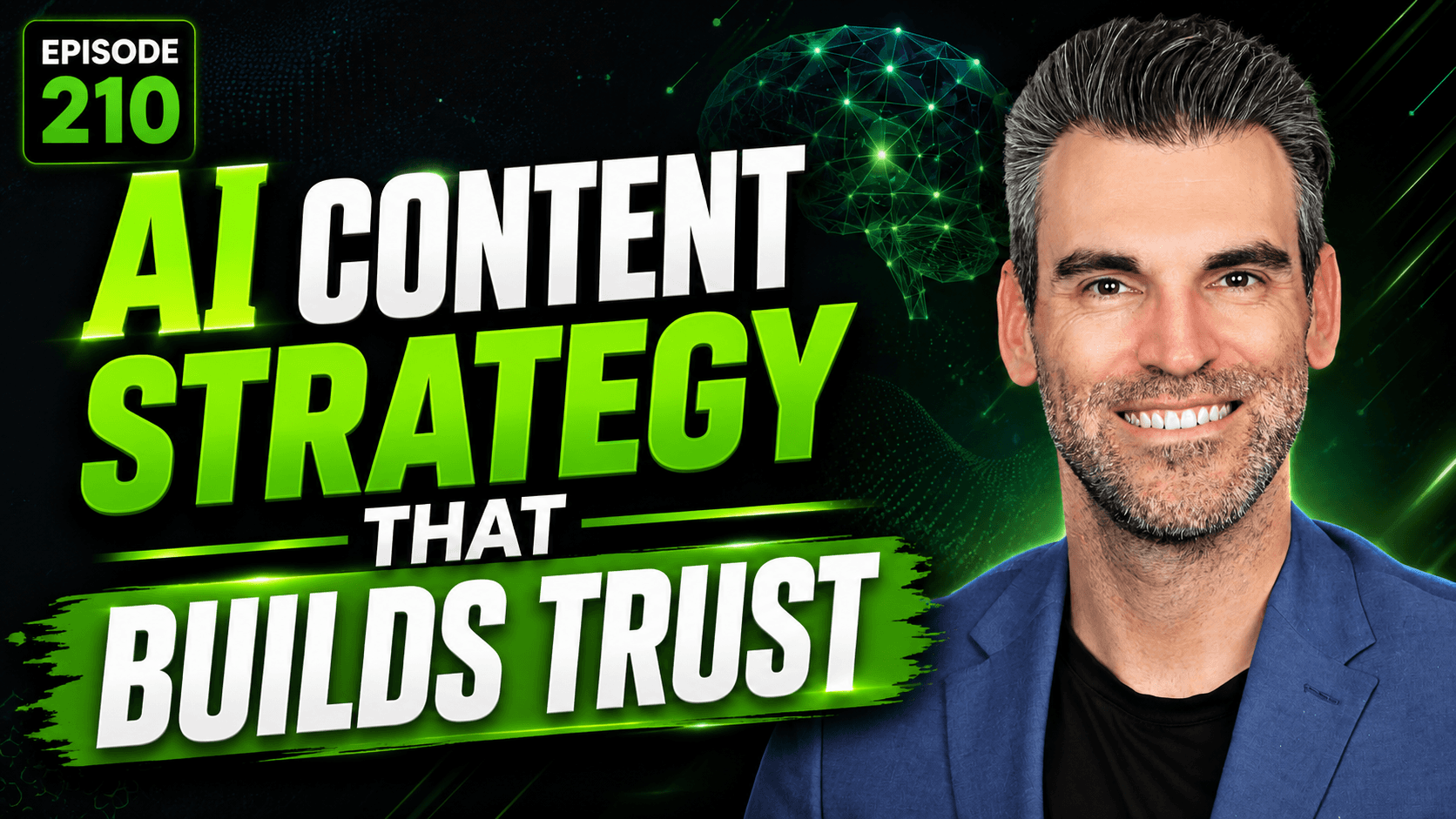
David Ebner Shares How
Marketing
Content Workshop founder David Ebner explains why human creativity — not AI — still drives brand storytelling that converts. He breaks down SEO, GEO, and AEO strategy, why the customer (not the founder) is the hero of every brand story, and how client-first service builds referral-driven Business Superfans.
Explore Episode 210 →
EPISODE 191
Andy Janaitis Turns Wasted
Leadership
Pay-Per-Click Advertising often feels like a money pit for small businesses—but in Episode 191, Andy Janaitis breaks down how to transform wasted budget into predictable growth. Too many entrepreneurs pour money into Google Ads and Meta campaigns without proper tracking, strategic targeting, or alignment with business expansion goals. The result? Inconsistent ROAS, confusing reports, and frustration. Andy shares how to build a disciplined PPC strategy powered by clean data, automated bidding...
Explore Episode 191 →
EPISODE 225

Ely Delaney
Communication
Most service business owners have a list that has gone quiet. Ely Delaney, founder of Purple Knight Marketing and author of The Follow-Up Code, explains how relationship-first, value-first follow-up wakes it up, including the client who went from about $35,000 to about $110,000 a month by changing nothing but his words.
Explore Episode 225 →

Lake House Digital
Guest Offer
Lauren invites listeners to start a conversation with Lake House Digital at thelakehousedigital.com, or to connect with her on LinkedIn (Lauren Miller Schafer) or with the company page, Lake House Digital.
Topic Tags
SEO/GEO/AEO, Paid Advertising, Marketing Measurement, AI Strategy, Referrals, Client Relationships, Trust